


4-High or 4-Low?
- C.Miles

- Mar 15, 2023
- 5 min read

So, while this sort of includes some AWD drive vehicles such as my wife's Limited 4Runner with the dial-selection style selector, this is primarily focused on true 4x4 vehicles with a shifter-style selected transfer case (images below), or those that are not AWD, but more on that in a bit. We are here to cover 4-high and 4-low and when they should be applied, and its actually pretty simple.


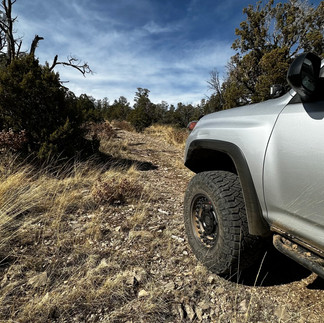


4-high is very straight forward and in most cases is used more frequently than its reduction counterpart. 4-high simply applies engine power to all 4 wheels and provides a fairly even push and pull in a 1:1 gear ratio, meaning that all 4 tires will turn just as if the vehicle was in 2wd. This is generally handy on smoother dirt, mud, sand or snow covered roads that speeds can comfortably exceed 20mph. 4-high can also be used on smaller obstacles that may be found on the trail, but is a good all around selection until things get a bit more serious. My prime example would be driving on the beach, or a dirt surface forest road after a rain that may have some slightly deeper puddles or a slick surface. I would not recommend any 4x4 selection for highway or pavement use, however, I have utilized 4-high on surface roads (not highway) during heavy snow and ice, but maintained a speed under 40mph. That is a completely different subject, and like most things these days, heavily debated. The pictures above were trails where a combination of both 2wd and 4-high were used.
4-low is just as described, and implements a lower gearing range, or a gear reduction within the transfer case and reduces the 1:1 ratio to a 2.566:1 ratio for the Toyota 4Runner. By reducing the gear ratio the tires now turn at a much slower rate, and due to the lower gear, torque is more pronounced allowing the vehicle to climb or traverse obstacles with less effort. Now while I may have fumbled the explanation on this a bit, when to use 4-low should clear the understanding a bit. 4-low application is again widely debated on when it should be used, so I am going to describe when I use it personally.


I will only use 4-low when absolutely necessary as it generally limits your speed to well under 15mph and because of that I do not use it on level surfaces even when snow or soft mud is present. If you search google you will see some suggesting otherwise, however, in snow, mud or sand I have learned that momentum is your friend, and in some cases, its necessary to build up that tire rotational speed to keep you out of trouble thus I utilize 4-high. Now, on some of the trails I have taken while mapping for OnX Offroad, the trail was generally flat and smooth with some small obstacles or mud puddles, I would leave my 4runner in 4-high. There have been several cases where 4-low was utilized, and while we all know cameras kill the perception of grade of a hill, the three pictures above are the best examples I have of steeper grades. If you know anything about grade percentages, if its over 12% grade, especially on a rocky surface with loose rocks or dirt, I will then use 4-low as I want the 4runner to slowly work its way up the hill or obstacle and I need as much torque as possible to make the climb, or even on the decent to help control my speed. The center picture hill equated to an 18% grade, and the one that followed (not pictured for good reason) was just a bit steeper at 22.5%. The picture to the right, stupidly done at night, was also roughly 18% but a decent, and I retained 4-low and braking to help manage my speed as it was extremely loose rock.
On steep climbs, loose or shifting terrain and large obstacles 20" or larger will get 4-low utilized. For the most part, I am in 4-high and anyone enjoying most forest service roads will also be utilizing 4-high. If you approach an obstacle and you get half way up and tires start to spin due to loss of traction, back off the obstacle, shift into neutral and change your transfer case selector to 4-low. Your gears, transmission, tires and the trail surface will thank you. That is the best way I can describe when to utilize the two without actually taking a crowd on a trail where both are used and giving a first hand example.


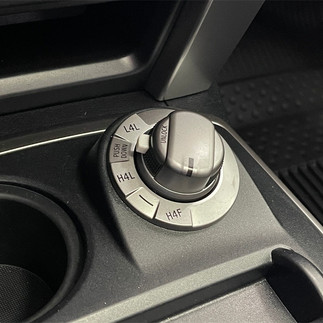
So, I mentioned at the beginning of this post that it primarily applies to true 4x4 vehicles more than AWD, and if you own a 4Runner you will recognize one of the three images above. While I don't have all the gearing data, AWD vehicles simply operate differently and in most cases the parts within the driveline are not as stout and gearing is different within the transfer case which in my opinion does limit their abilities on more extreme trail surfaces. Referencing the pictures above from left-to-right we have the manual selected transfer case, the original true 4x4 style, which can still be found in various models of the current 4Runner's and even my old 2010 Trail Edition. The center photo shows the electronic selector of a true 4x4 transfer case, and outside of having a solenoid doing the hard work, the internal operation and gear ratio is the same as the old style shifter. The picture to the far right is for the AWD models, such as my wife's 2016 Limited 4Runner, and while it still performs well offroad, I would never subject it to the more difficult trails that my TE has tackled.
While proofreading this post, I still feel that something is missing as far as my description of when to utilize 4-high and 4-low, so think of it like this. A Kentucky Derby thoroughbred isn't going to carry you plus your gear on the Grand Canyon tours as its built for speed, and while it has torque it isn't applied the same, that is thoroughbred is your 4-high, and while it can still handle some obstacles and will fly through mud and snow, its meant for momentum. 4-low is the donkey that will traverse those steep canyon trails in the Grand Canyon, nice and slow, speed not even a consideration and will hop up a rock ledge with ease...but obviously, we'd never see a donkey run the Kentucky Derby.
Best thing to do is gain the experience first hand, gently and gradually of course as no one wants damaged parts. But hopefully someone will find this bit of information beneficial, and maybe one day I can have a couple people tag along that would like to see some good examples of when to use 4-low. If you have any questions, feel free to shoot me a message here on the contact me page, through Instagram or even Facebook.


Comments